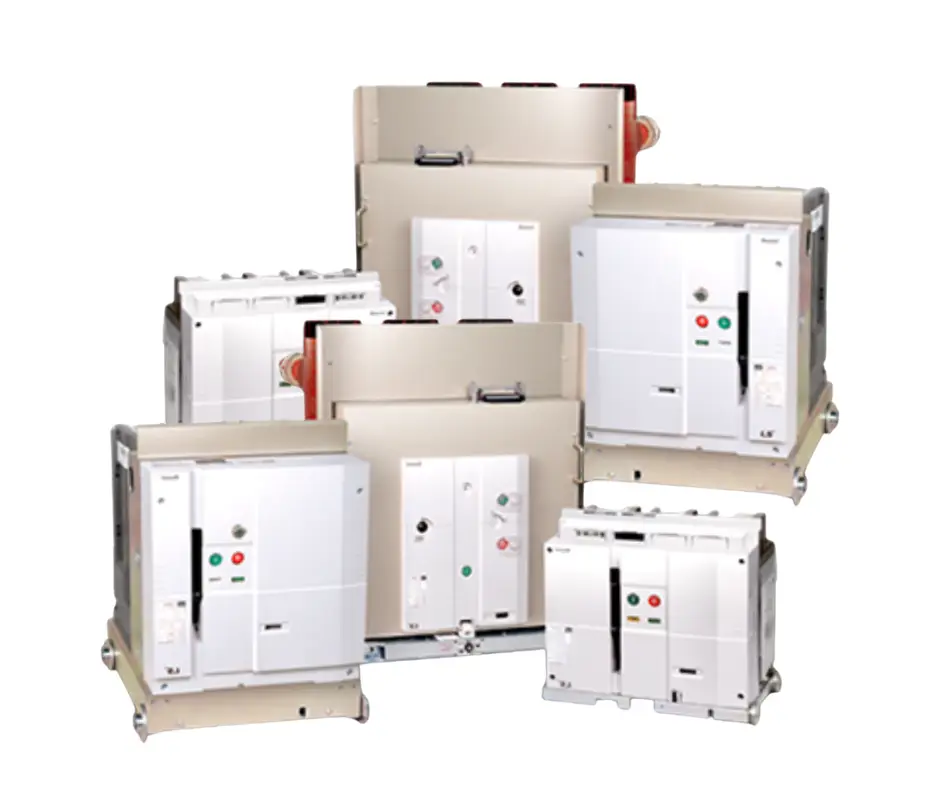


Introduction to the VCB User Manual
This VCB user manual is designed as a comprehensive guide for engineers, technicians, and operators who work with Vacuum Circuit Breakers (VCB). It provides essential information about the definition, working principle, applications, installation, operation, protection functions, monitoring features, troubleshooting, and preventive maintenance of VCBs.
Vacuum Circuit Breakers have become the standard solution for medium-voltage power distribution due to their high reliability, minimal maintenance needs, and superior arc-quenching capability. This manual ensures that users not only operate the VCB safely but also understand how to optimize its performance throughout its service life.
By the end of this manual, you will:
- Understand what a VCB is and how it works.
- Learn the technical specifications that must be checked before installation.
- Gain knowledge of operation procedures and safety requirements.
- Be able to configure protection and monitoring features.
- Apply preventive maintenance to extend VCB life expectancy.
- Troubleshoot common issues effectively.
What is a Vacuum Circuit Breaker (VCB)?
A Vacuum Circuit Breaker (VCB) is a medium-voltage switchgear device that interrupts electrical current using vacuum as the arc-quenching medium. When the contacts of a VCB separate, any arc formed is quickly extinguished due to the absence of free electrons and ions in a vacuum.
Key Features of VCB:
- Medium-voltage range: 3.3 kV – 36 kV.
- High short-circuit breaking capacity.
- Long service life: up to 30,000 operating cycles.
- Environmentally friendly: no SF6 gas emissions.
- Compact design: suitable for indoor switchgear panels.
Applications:
- Power plants and substations.
- Industrial facilities (steel, cement, oil & gas).
- Commercial complexes and high-rise buildings.
- Renewable energy distribution networks.
👉 Every VCB user manual starts by highlighting the importance of VCB in protecting equipment and maintaining power system stability.
Principle of Operation
The working principle of VCB is based on arc extinction in a vacuum interrupter.
- Contacts close → current flows through the circuit.
- Contacts open → an arc forms momentarily.
- Arc extinction → in vacuum, arc particles condense rapidly, and current flow stops.
- Dielectric recovery → the vacuum gap regains insulating strength quickly, preventing re-ignition.
Compared to other circuit breakers (Air Circuit Breaker, Oil Circuit Breaker, SF6 Circuit Breaker), the VCB is the most reliable and clean option for medium-voltage applications.
Technical Specifications – What to Check Before Installation
Before installing, this VCB user manual recommends verifying the following specifications:
Electrical Ratings
- Rated voltage: 12 kV, 17.5 kV, 24 kV, or 36 kV.
- Rated current: 630 A, 1250 A, 2500 A, up to 4000 A.
- Short-circuit breaking capacity: 25 kA, 31.5 kA, 40 kA.
- Rated frequency: 50/60 Hz.
Mechanical Design
- Operating mechanism: spring-charged (manual or motorized).
- Closing & tripping coils.
- Mechanical interlocks for safety.
- Expected mechanical endurance: >10,000 operations.
Control & Protection Integration
- Compatible with Digital Relays (IEDs).
- Communication protocols: RS485/Modbus, IEC61850, optional BLE/NFC.
- Trip/Close circuits with DC supply (110V/220V).
Installation Guide
Environmental Conditions
- Ambient temperature: –25 °C to +60 °C.
- Humidity: 0–95% non-condensing.
- Altitude: up to 2000 m (derating required above this).
- Pollution level: within IEC 62271 standards.
Installation Checklist
- Inspect packaging for damage during transport.
- Place VCB in a clean, dry switchgear room.
- Maintain minimum clearances as per manufacturer’s instructions.
- Verify rated voltage/current match the system.
- Ensure grounding system is properly connected.
👉 A common mistake found during audits is ignoring the environmental limits. This VCB user manual emphasizes verifying site conditions before energizing.
Wiring and Communication Setup
VCBs are equipped with auxiliary terminals for:
- Control power supply: DC 110V/220V.
- Trip & Close circuits.
- Digital outputs (DO): for alarms and status signaling.
- Communication ports: USB/RS485 (Modbus), optional Ethernet or IEC61850.
Best practices:
- Use shielded twisted-pair cables for RS485.
- Keep communication wiring away from power cables.
- Ensure proper polarity when wiring trip/close circuits.
Monitoring and Measurement Functions
Modern VCBs connected with Intelligent Electronic Devices (IEDs) provide:
- Real-time measurement: current, voltage, frequency, power, energy.
- Power quality analysis: THD, harmonics, unbalance.
- Event recording: log of operations, trips, alarms.
- Waveform capture: pre- and post-fault analysis.
👉 This VCB user manual highlights that monitoring not only improves safety but also supports predictive maintenance.
Protection Functions
Typical protection elements in a VCB relay include:
- Overcurrent Protection: Long-time (L), Short-time (S), Instantaneous (I).
- Ground Fault Protection (G).
- Voltage/Frequency Protection: Under Voltage (UV), Over Voltage (OV), Under Frequency (UF), Over Frequency (OF).
- Differential Protection: for transformers and generators.
- Special Features:
- ZSI (Zone Selective Interlocking).
- ERMS (Energy Reduction Maintenance Setting).
- ROCOF (Rate of Change of Frequency) for grid stability.
Safe Operation Procedure
Normal Operation
- Pre-checks: inspect insulation, mechanism, interlocks.
- Spring charge: ensure operating spring is fully charged.
- Close the breaker from the control panel or remotely.
- Trip the breaker during test runs to verify functionality.
Safety Notes
- Never close against a short-circuited bus.
- Always follow lockout-tagout (LOTO) procedures.
- Record test results and event logs.
Preventive Maintenance
VCBs are known for low maintenance, but periodic checks are essential.
Monthly/Quarterly
- Inspect panel cleanliness and remove dust.
- Tighten control wiring and power connections.
- Check diagnostic records for abnormal events.
Annually
- Measure contact resistance (micro-ohmmeter).
- Check insulation resistance (megger test).
- Inspect operating mechanism lubrication.
After Major Fault
- Download event logs and waveforms.
- Inspect interrupter contacts for wear.
- Replace damaged trip coils or auxiliary contacts.
Common Problems and Troubleshooting
| Problem | Possible Cause | Recommended Action |
|---|---|---|
| VCB does not close | Spring not charged, faulty close coil | Recharge spring, check coil voltage |
| VCB trips immediately | Incorrect relay settings, fault on load side | Verify protection settings, test load |
| High contact resistance | Worn contacts, loose connections | Replace contacts, tighten bolts |
| Communication failure | Wrong baud rate, cable fault | Check Modbus settings, replace cable |
| Unusual noise during operation | Mechanical wear | Inspect and lubricate mechanism |
👉 This VCB user manual ensures users can resolve issues quickly without extended downtime.
H2: Safety Precautions
- Use insulated tools when working on live circuits.
- Never bypass safety interlocks.
- Ensure grounding system is intact before operation.
- Follow IEC 62271 safety standards.
Future Trends in VCB Technology
The evolution of VCBs includes:
- Integration with smart grids via IoT and cloud monitoring.
- Advanced predictive maintenance using AI analytics.
- Replacement of SF6-based breakers in medium voltage.
- Compact modular designs for renewable energy applications.
Frequently Asked Questions (FAQ)
Q1: What is the difference between ACB and VCB?
ACB (Air Circuit Breaker) is used in low-voltage (≤1 kV) systems, while VCB is used in medium-voltage (3.3–36 kV) systems.
Q2: Do VCBs require a trip unit?
Yes, modern VCBs integrate digital trip units (IEDs) for protection, control, and monitoring.
Q3: How long does a VCB last?
With proper maintenance, a VCB can last 20–30 years with up to 30,000 operations.
Q4: Can a VCB be used outdoors?
Most VCBs are designed for indoor switchgear, but outdoor versions are available with weatherproof enclosures.
Q5: What is the main advantage of VCB over SF6 circuit breakers?
VCB is more eco-friendly, requiring no greenhouse gas handling.
This VCB user manual provides more than just operation instructions—it is a complete guide to installation, wiring, protection configuration, monitoring, troubleshooting, and preventive maintenance. By following the recommendations, engineers can ensure the safe, efficient, and long-lasting operation of Vacuum Circuit Breakers in any medium-voltage application.
With advancements in digital protection relays and smart monitoring, the VCB will remain the preferred choice for medium-voltage switchgear worldwide.
VCB User Manual Refererence document:
[Susol_Metasol ACB] STU 사용자 설명서…