


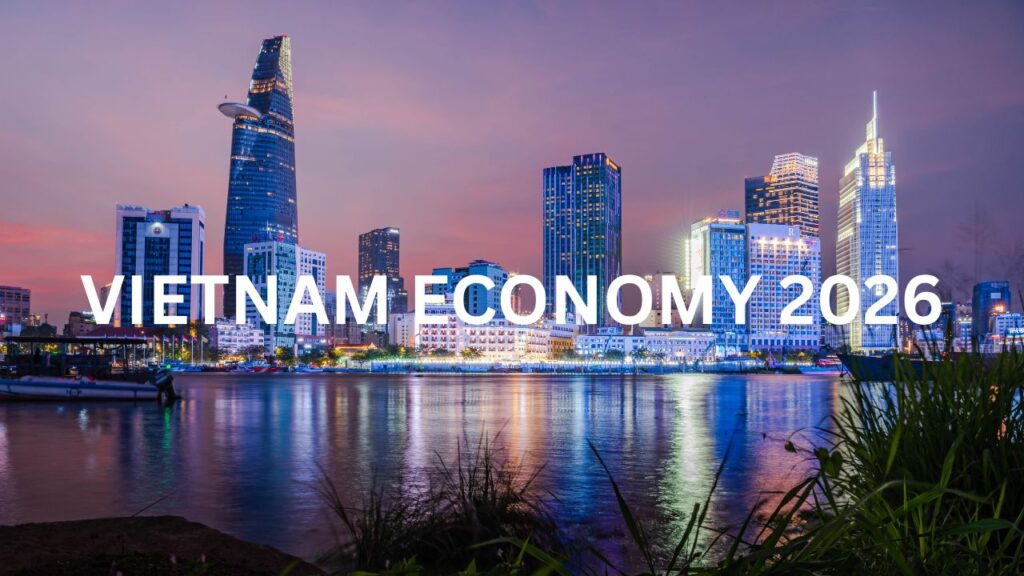
The Vietnam economy in 2026 marks the beginning of a new five-year socio-economic development plan for the period 2026–2030, opening a promising chapter for long-term economic expansion. With strong macroeconomic stability and impressive performance in 2025, Vietnam is entering 2026 with renewed confidence and momentum.
According to the Ministry of Finance, the government has submitted a five-year financial plan and medium-term public investment plan for 2026–2030, with a total estimated capital of VND 8.31 quadrillion. This massive investment framework is expected to provide a powerful boost to the Vietnam economy 2026 and create sustainable growth in the coming years.
Vietnam Economy 2025: A Solid Launchpad for 2026
Before looking ahead to the Vietnam economy 2026, it is important to recognize the remarkable achievements of 2025. Despite global economic uncertainty, Vietnam maintained strong economic resilience and stable macroeconomic indicators.
In 2025, Vietnam’s GDP growth reached 8.02%, while inflation remained controlled at 3.31%, within the limits set by the National Assembly. These results reflect effective economic management and coordinated policies implemented by the government.
Vietnam’s economic scale also expanded significantly, rising from $346 billion in 2020 to approximately $514 billion in 2025. This growth elevated Vietnam to the 32nd largest economy in the world.
Meanwhile, GDP per capita reached around $5,026, officially placing Vietnam among upper-middle-income economies. These achievements form a strong base for the continued expansion of the Vietnam economy in 2026.
Trade Growth Strengthens the Vietnam Economy 2026 Outlook
International trade continues to be a major pillar of the Vietnam economy 2026. In 2025, the country recorded total import-export turnover exceeding $930 billion, an increase of 18.2% compared to 2024.
Vietnam maintained a positive trade balance with a trade surplus of more than $20 billion, reflecting strong export performance in manufacturing, electronics, and industrial production.
Business development also remained positive. By the end of 2025, Vietnam had over one million active enterprises, an increase of more than 160,000 companies compared to 2024. This demonstrates growing confidence among investors and entrepreneurs in the Vietnam economic outlook for 2026.
Additionally, Vietnam’s stock market was upgraded to secondary emerging market status, a milestone that could attract more foreign investment capital in the coming years.
Government Budget and Public Investment Support Vietnam Economy 202
The government’s fiscal performance in 2025 also laid a strong foundation for the Vietnam economy 2026.
Total state budget revenue reached approximately VND 2.665 quadrillion, exceeding the initial estimate by 35.5% and increasing nearly 30% compared to 2024.
This achievement came despite the government implementing tax relief measures worth around VND 250.9 trillion to support businesses and economic recovery.
Public investment spending reached over VND 1.1 quadrillion, the highest level ever recorded. Increased investment in infrastructure and public projects is expected to further stimulate economic growth and strengthen the Vietnam economy in 2026.
Infrastructure Expansion Driving the Vietnam Economy 2026
Infrastructure development continues to be one of the key drivers of the Vietnam economy 2026.
By the end of 2025, Vietnam had completed 3,345 kilometers of expressways, exceeding the national target. In addition, 1,711 kilometers of coastal roads were also completed, significantly improving regional connectivity.
Major national projects also made significant progress, including:
- Long Thanh International Airport (Phase 1)
- Key energy infrastructure projects
- Seaport expansion initiatives
- Transportation and logistics infrastructure
These infrastructure investments are expected to enhance logistics efficiency and support industrial growth, which will play a critical role in sustaining the Vietnam economy in 2026 and beyond.
Institutional Reforms and New Economic Models
In addition to infrastructure, institutional reforms are another critical factor shaping the Vietnam economy 2026.
In 2025, the government submitted 99 draft laws and resolutions to the National Assembly, the highest number ever recorded in a single year. These legislative efforts aim to remove institutional bottlenecks and create new development opportunities.
Several innovative economic models are also being introduced, including:
- International financial centers
- Free trade zones
- Digital asset trading platforms
- Carbon credit trading markets
These initiatives could position Vietnam as a more dynamic and competitive economy in the global market.
Social Development and Improved Living Standards
Beyond economic indicators, Vietnam has also achieved progress in social development, which supports the sustainable growth of the Vietnam economy 2026.
Government programs in poverty reduction and social welfare have continued to deliver positive results. The national poverty rate decreased by approximately 1% in 2025 compared to the previous year.
Affordable housing programs also exceeded expectations, with over 103,000 social housing units completed, surpassing the annual target.
Improvements in healthcare, education, and cultural development have further contributed to better living standards for Vietnamese citizens.
Fiscal Policy Strategy for the Vietnam Economy 2026
As 2026 marks the first year of the 2026–2030 socio-economic development plan, the government plans to implement several large-scale infrastructure projects requiring significant financial resources.
The Ministry of Finance has proposed a total public investment budget of approximately VND 8.31 quadrillion for the five-year period.
To maintain macroeconomic stability while supporting growth, fiscal policy will be managed in a proactive and flexible manner, closely coordinated with monetary policy and other economic measures.
Mobilizing Resources for Future Growth
The government plans to strengthen financial management and expand digital transformation in public finance to enhance transparency and efficiency.
Budget spending will continue to be closely monitored to ensure efficient and responsible use of public funds. At the same time, authorities will carefully manage budget deficits and public debt while utilizing available fiscal space to support development investment.
Funding for major projects will come from multiple sources, including:
- Increased state budget revenue
- Cost-saving measures in public spending
- Government bond issuance
- Other legal financial sources
These strategies are expected to provide sufficient capital to ensure that major projects progress on schedule and contribute to the sustainable growth of the Vietnam economy 2026.
Outlook for Vietnam Economy 2026 and Beyond
Although challenges remain, including global economic uncertainties and financial market fluctuations, Vietnam’s strong economic foundation and ongoing reforms provide confidence for future growth.
With continued infrastructure investment, institutional reform, and proactive fiscal policies, the Vietnam economy in 2026 is widely expected to enter a new cycle of rapid and sustainable development.
Vietnam is increasingly positioning itself as one of the most dynamic and promising economies in Asia, with significant potential for long-term growth.